Deformative Signal

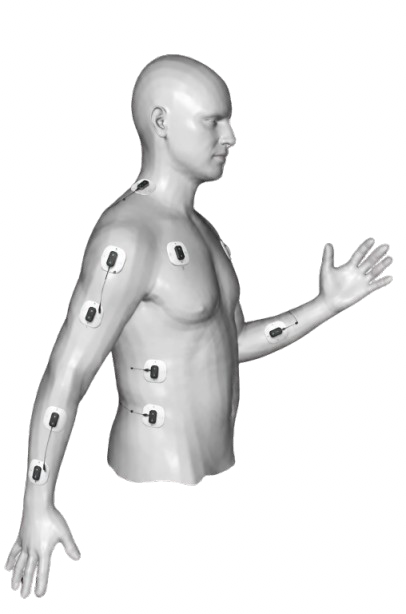
The result is a raw soundscape that synthesizes algorithmic complexity and physical boundary-pushing into a poetic, tactile medium.
Explore the physical structure of the body. Click to activate, then drag joints with your mouse to stretch the body, or press and hold keys 1 to 6 to flex individual limbs smoothly. Tap to activate sound, then drag the glowing joints with your finger. Use Random or Spin when you want the body to move on its own.
Angeliki
Angeliki (Sinaloa, Mexico) is an intermedia performance artist and contortionist based in Chicago, IL. Her practice investigates the intersections of the physical body, the bodily residue, and real-time technology. Translating interior states of vulnerability, solitude, and spatial presence, she finds inspiration in the overlooked: the hidden, the uncanny, and the unhuman.
Vishnoi
Vishnoi (Lucknow, India) is a complexity physicist and data artist based in Chicago, IL. His practice investigates the intersections of physics, emergent social geometries, and generative art. Translating systems of collective human behavior, he finds inspiration in the simplicity underlying complexity, the mathematical coherence of nature, and the beauty of self-evolving mechanisms.